The Colour That Killed
Emerald ball gowns laced with arsenic, mauve fever and the chemistry that made fashion bright: the story of dyes, recalled every time we talk about “clean” clothes.
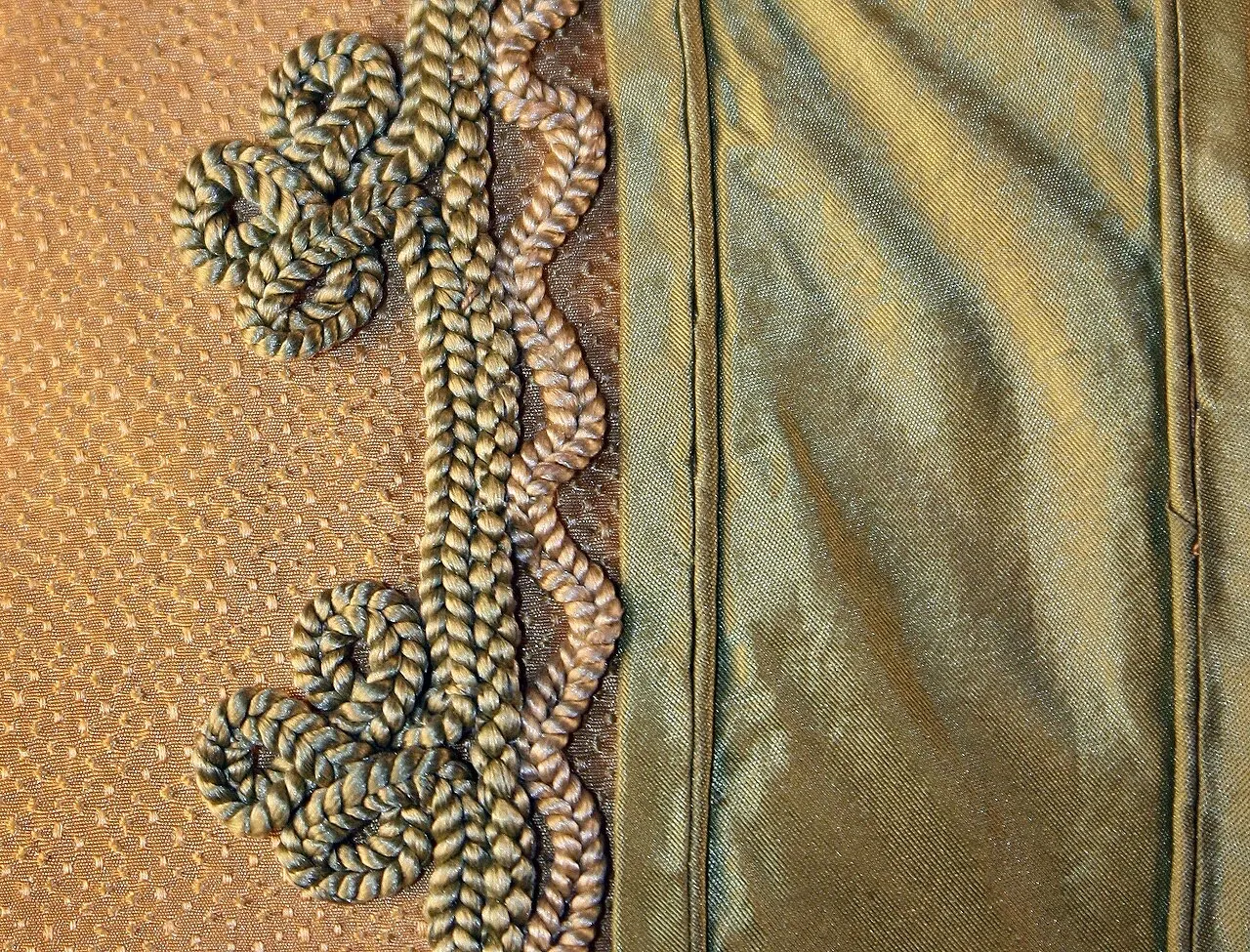
Today we take it for granted that clothes cost the same in any colour, and that neon green is on the rack of every high-street shop. Two hundred years ago, though, a bright, lasting colour was a luxury, and sometimes a deadly one. Fashionable women of the mid-nineteenth century adored emerald: it glittered in candlelight and gaslight like no natural dye. That green was made from arsenic. It coloured ball gowns, gloves, artificial flowers for the hair, even the wallpaper in drawing rooms. When brands today talk about safe dyes and transparent supply chains, it is worth remembering that fashion has already paid for beauty once with health, both the wearers’ and the makers’.
Scheele’s Green
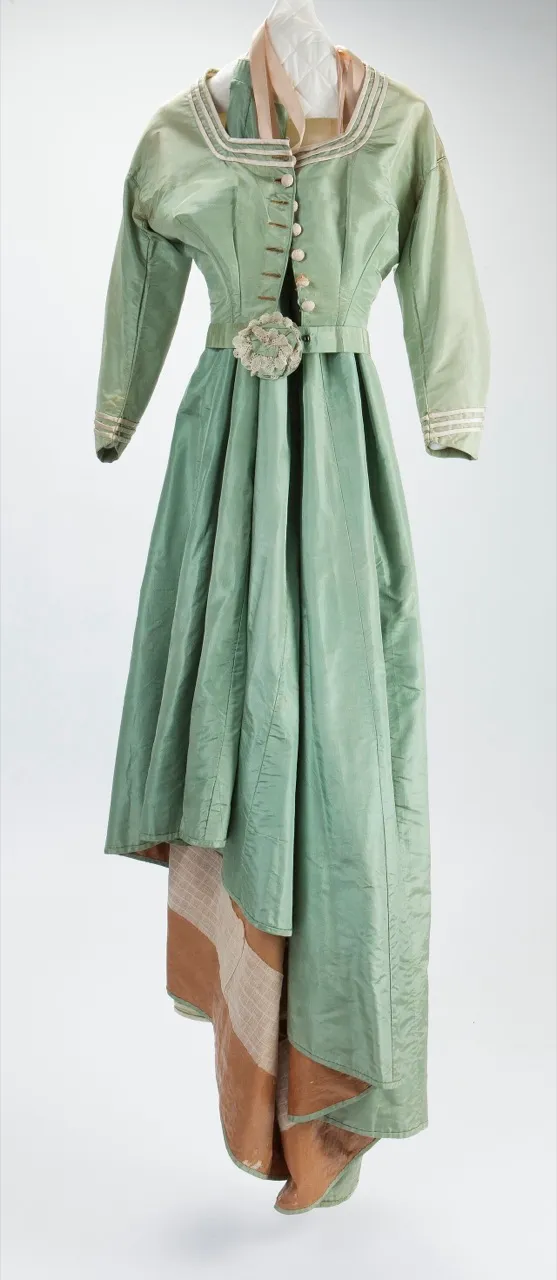
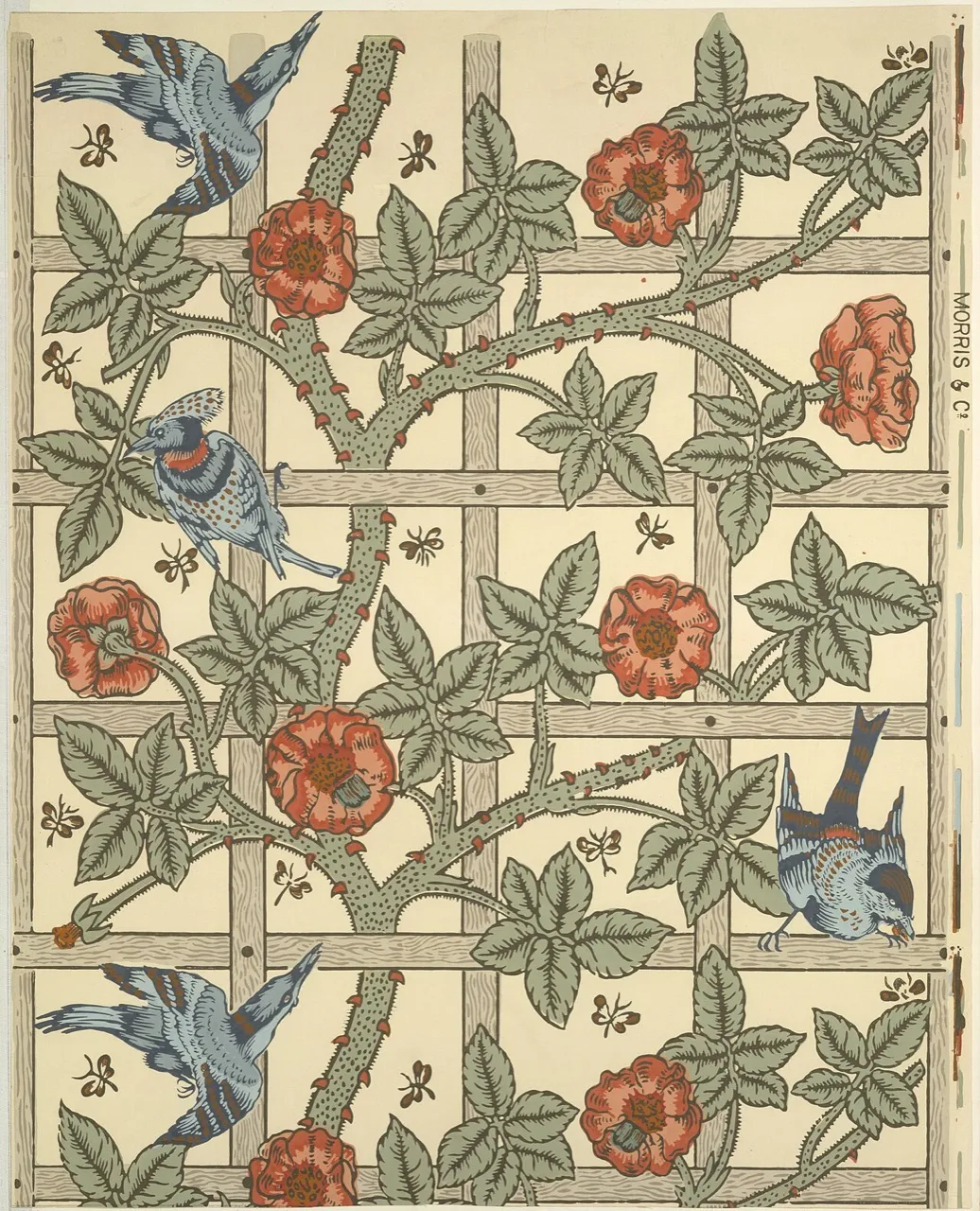
In 1775 the Swedish chemist Carl Wilhelm Scheele produced a vivid green pigment based on copper arsenite. It was cheap, lasting and wonderfully striking, and it quickly spread across Europe as “Scheele’s green.” In the early nineteenth century an even brighter version appeared, known as Schweinfurt or Paris green. These pigments coloured everything: fabrics, paper, wallpaper, toys and even confectioners’ decorations. The trouble was that the arsenic never went away. Dust from dyed cloth and paper flaked off with every movement, and in damp rooms wallpaper released poisonous compounds. People complained of headaches and rashes without suspecting that the cause hung on their walls and rustled on their skirts.
The emerald craze
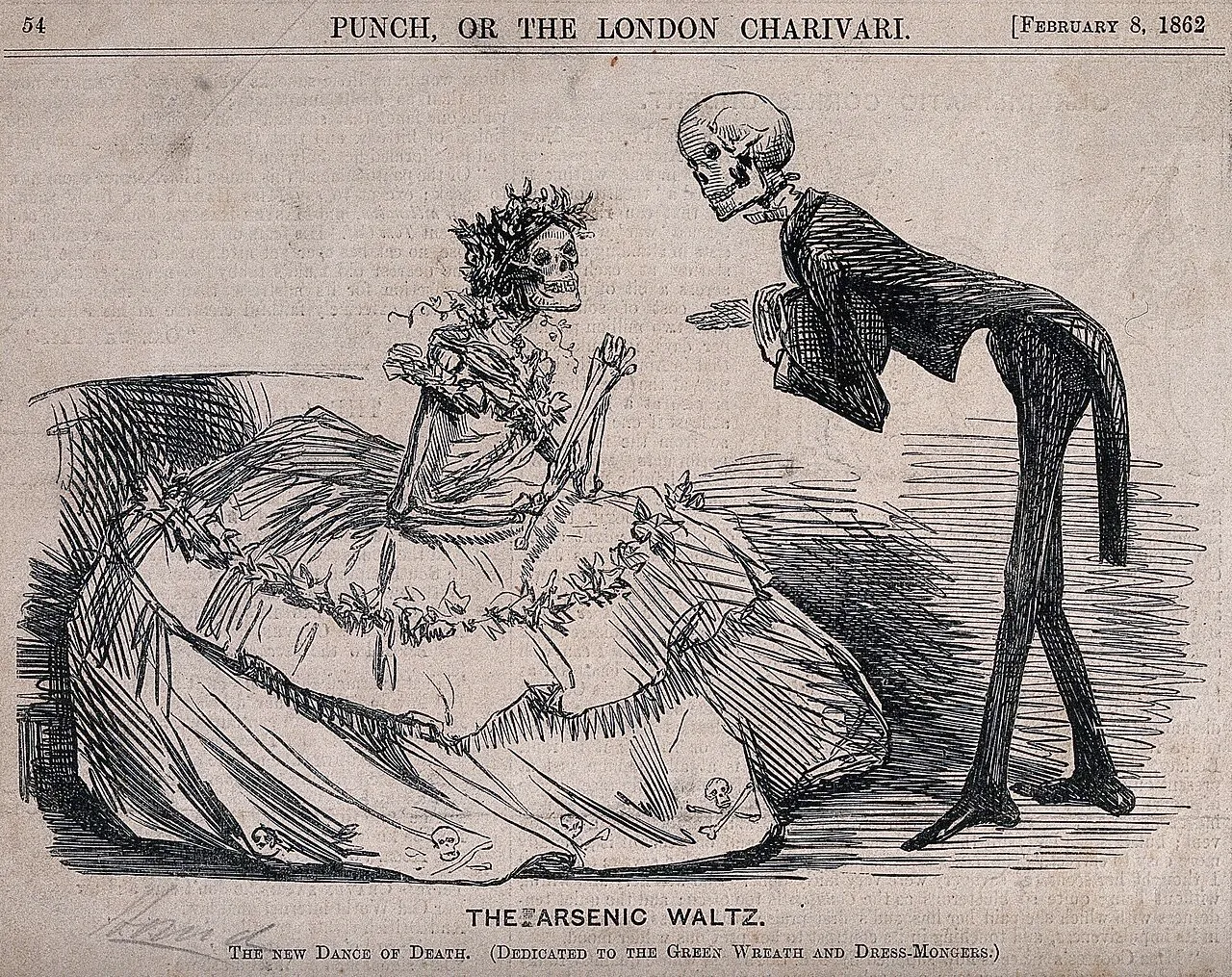
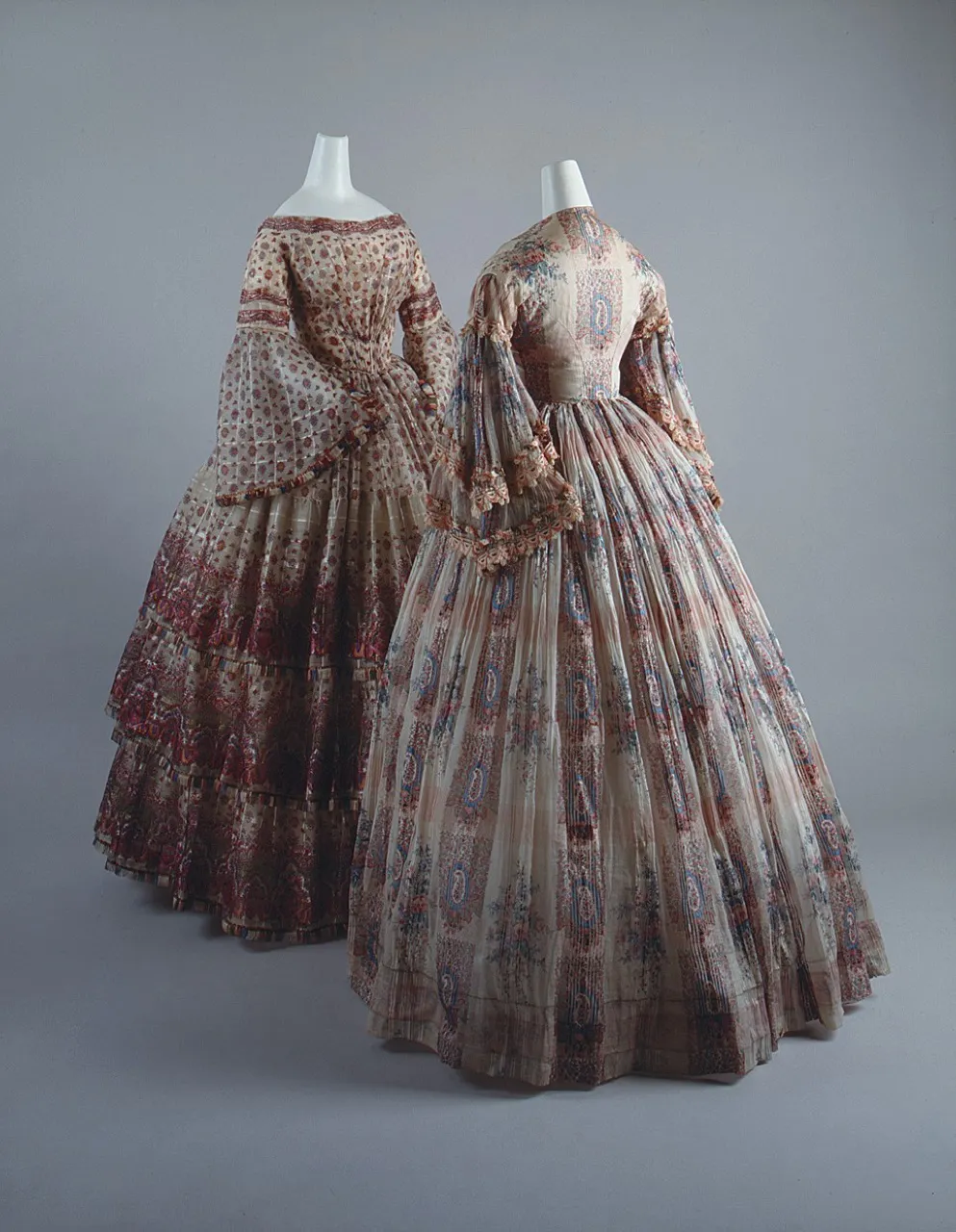
Those who made this beauty suffered most. The women who made artificial flowers and leaves worked for hours with green powder. In 1861 Matilda Scheurer, a young worker in such a workshop, died in London; doctors examined her case in detail and it became one of the most notorious. The press took up the subject. In 1862 the satirical magazine Punch published a drawing called “The Arsenic Waltz”: skeletons in ball dress whirling in a dance. Medical journals calculated how much poison could shake off a single ball gown in an evening. Gradually the fashion for poisonous green faded, less because of bans than because of fear and the arrival of new dyes.
The Key Colours of the Nineteenth Century
Scheele’s green (1775): copper arsenite, bright green, poisonous
Schweinfurt green (1810s): even brighter, and also made with arsenic
Mauveine (1856): the first synthetic aniline dye, a purple-lilac
Fuchsine (late 1850s): purplish pink, also known as “magenta”
Mauve Fever
The real revolution was made by an eighteen-year-old student. In 1856 the Englishman William Henry Perkin was trying to synthesise quinine, the malaria drug, from by-products of coal tar. The quinine never appeared. Instead a dark substance was left at the bottom of the flask that dyed silk a rich purple. Perkin patented the dye, named it mauveine and opened a factory. The timing was perfect: Empress Eugénie wore mauve, and fashionable women on both sides of the Channel followed. Mauve became the colour of the age so fast that Punch joked about a “mauve measles” sweeping London. And so an accidental failure in a laboratory gave rise to the whole of synthetic dye chemistry.
Mauveine was followed by dozens of new aniline dyes: crimson fuchsine, called “magenta” after the Battle of Magenta in 1859, along with blues, violets and reds. Colour ceased to be the privilege of the rich, and dyeing cloth in a bright shade now cost next to nothing. Fashion became more colourful than ever. But synthetic chemistry turned out to have its own price: dye works poured waste into rivers while workers breathed the fumes. The question “what is colour made of?” has never gone away since. It simply moved from London workshops to the new manufacturing centres of the world.
Every new colour in the history of fashion is also a story about who paid for it.
Colour Without Victims
Today dyeing and finishing are considered among the dirtiest stages of making clothes. European rules restrict hazardous substances in textiles, brands publish lists of banned chemicals, and designers experiment with natural dyes such as indigo, madder, bark and food-industry waste, and with technologies that save water. The interest in “clean” colour is a direct heir of the Victorian scandals. We are asking again the question doctors once asked as they looked at green dust on a ball gown: what is this made of, and who is paying for it?
The story of poisonous green is not a bogeyman from the past but a reminder of what beauty costs. Fashion has always wanted brighter, cheaper and faster, and every technological leap brought delight first and a bill afterwards. Perkin’s mauve dress opened an era in which colour became democratic. The emerald dress with arsenic showed that democratic colour must come with responsibility. The next time you see words about safe dyes on a label, think of “The Arsenic Waltz”: behind those words lie a century and a half of arguments, illness and discovery.