Olympic Chic
The 2026 Winter Olympics were held in Milan and Cortina d’Ampezzo, cities where sport and fashion have long spoken the same language. How the mountains invented the winter holiday, and skiing invented modern clothes.

In February 2026 the Winter Olympic Games were hosted by Milan and Cortina d’Ampezzo, the first time the official name of the Games contained two cities. For Italy this is a special symbol: Milan is the capital of fashion, while Cortina had already hosted the Winter Olympics in 1956 and for decades remained a resort for film stars and aristocrats. Olympic team kits have long become a fashion event: they are entrusted to well-known design houses, and the unveiling of the uniform is discussed no less than the competitions. But the alliance of mountains and fashion began long before television broadcasts. First people had to want to come to the mountains in winter at all, and that happened only recently by the measure of history.
The Wager in St. Moritz
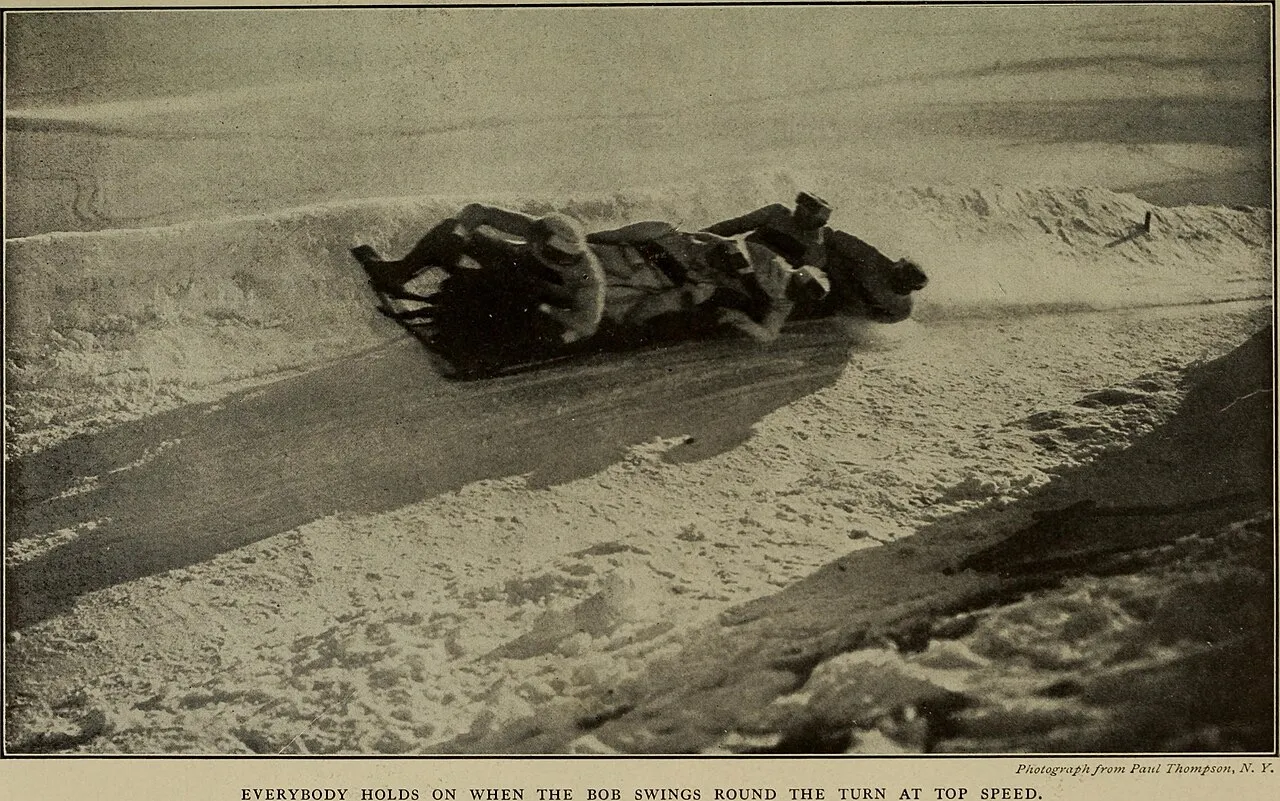
Until the mid-nineteenth century the Alps in winter were considered a place where no sensible person would go. Tourists came in summer to walk, breathe the air and take cures. According to a well-known legend, in 1864 Johannes Badrutt, owner of a hotel in St. Moritz, Switzerland, offered his English guests a wager: if they came in winter and did not like it, he would pay for their journey. The guests came, stayed until spring and told their friends. However it happened, St. Moritz became one of the cradles of winter tourism: sleigh runs, skating rinks and the first winter hotels with electricity appeared here. Later the small town hosted the Olympic Games twice, in 1928 and 1948.

The birth of the winter resort
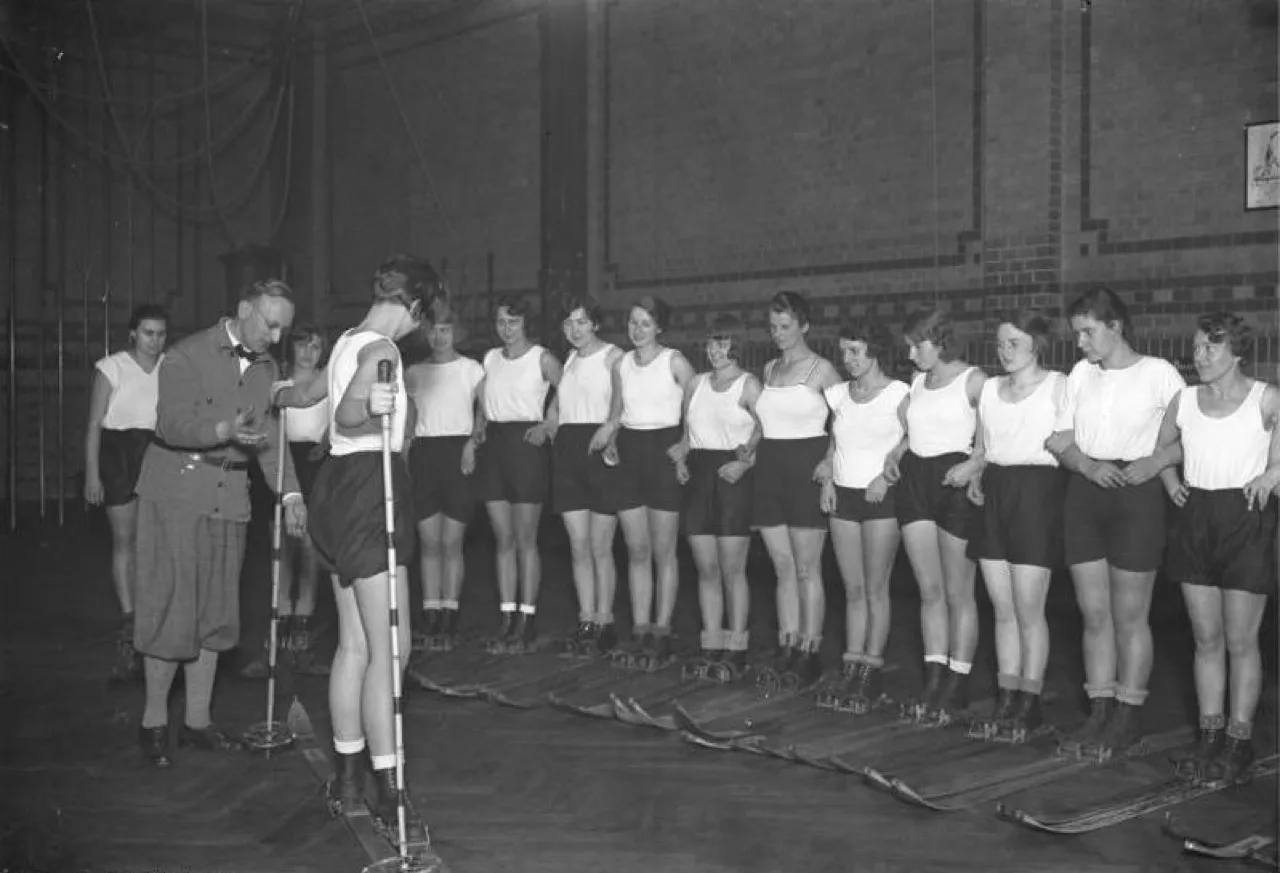
The first women skiers skied in long woollen skirts, with trousers or gaiters worn underneath, as propriety mattered more than comfort. Men wore tweed suits and breeches. Everything changed in the 1920s and 1930s: skiing became a fashionable sport, and women finally moved to trousers. Special ski outfits appeared, with patterned sweaters and zip-up jackets. The ski resort turned into a catwalk: people came to ski, but no less to be seen. Fashion magazines began shooting winter editorials on the slopes, and photographs of girls in ski suits became as much a symbol of freedom as swimsuits on the beach.
The Winter Games and Fashion
1924: the first Winter Olympic Games, Chamonix
1928 and 1948: St. Moritz
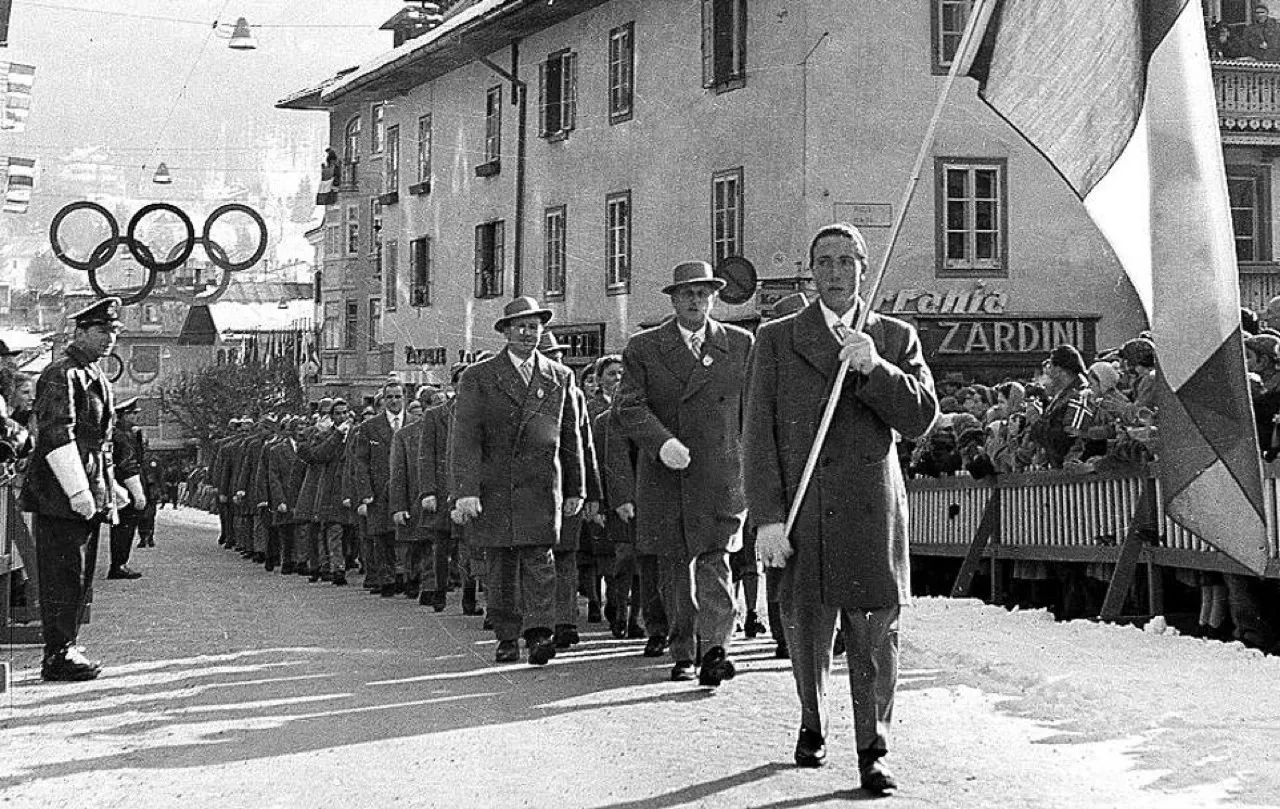
1956: Cortina d’Ampezzo
2026: Milan and Cortina d’Ampezzo, the first Games with two cities in the official name
Italians on the Slope
Post-war Italy turned the ski suit into a design object. Emilio Pucci, the future king of bright prints, began precisely with skiwear: in the late 1940s his ski outfits were noticed and published by the American Harper’s Bazaar. In the 1950s the German brand Bogner became famous for stretch ski trousers that hugged the figure. In France Moncler appeared, whose quilted down jackets were first made for workers and mountaineers. The 1956 Olympics in Cortina, one of the first to be shown on television, made Italian resorts a fashionable destination. Skiing became part of social life, together with evening dress in hotels and photographers on terraces.
Fashion owes a great deal to the mountains. The quilted down jacket, the sweater with a jacquard pattern, stretch trousers, sunglasses, the beanie, thermal underwear: all of it came into the city wardrobe from the slopes. Mountain clothing solved real problems: warmth, freedom of movement, protection from the wind. And then, as so often happens, the functional garment became a symbol of a lifestyle. When we put on a down jacket in the city, we play at being mountaineers a little, just as in a trench coat we play at being an officer. Each Olympic Games adds new colours to this game.
The mountains gave the city not only down jackets but also the idea that leisure can be fashionable.
The Kit as Statement
Today the Olympic kit is a separate genre of fashion. It is designed by major houses and sports brands, and it interweaves national symbols, technology and the wish to please millions of viewers. Sometimes the kit becomes an event in itself: fans snap it up, it is argued over on social media, and designers get a chance to say something about their country. The Winter Games in Italy, a country where fashion is part of national identity, made this genre especially visible. Sport and fashion have finally stopped pretending they come from different worlds.
Winter in the archives
The history of winter fashion is the story of how leisure became part of a way of life. First a few Englishmen risked coming to the Alps in winter. Then the resorts became a stage, skiing a sport, and sportswear fashion. The 2026 Olympics in Milan and Cortina made a logical full stop to that story: the great city of fashion and the legendary mountain resort hosted the world together. If this winter you put on a down jacket and ski goggles, remember Badrutt and his wager: sometimes a whole industry begins with someone daring to do what, before them, was considered strange.